
The Fence Post Exchange
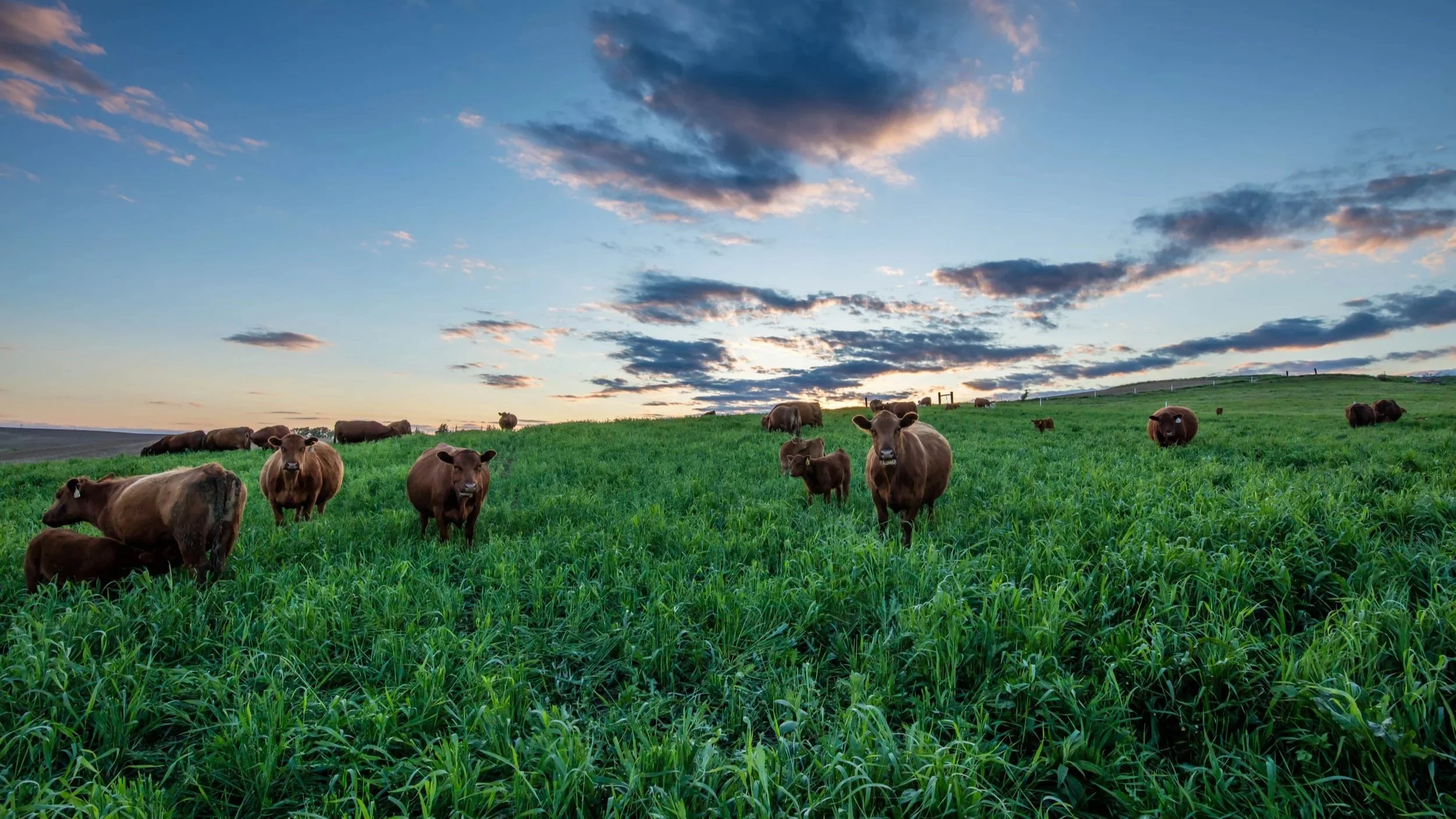
Imagine you're visiting one of our farmers. When you arrive, you meet and begin walking together to the lush green pasture where the cattle are grazing. After seeing the cattle, you stop near a corner fence post and begin discussing the ways both the farmer and you can regenerate the soil you've been given, whether it's measured in acres of pasture or feet of lawn or garden. "Listen in" on that conversation!
The five soil health principles are ways we can better care for our soil and our farmers use them to raise high quality, regenerative beef. Whether you have a garden, small yard or hope to one day, the soil health principles are a great place to start.
1. Soil Cover
Our farmers: By keeping the ground covered with living plants or residue, our farmers protect the soil surface and soil biology. Bare soil is vulnerable to erosion, extreme heat, and moisture loss. While it may look like there are lots of plants left for the livestock to eat, it’s important our farmers leave some of the plant so the soil is protected.
Your yard: Consider using wood chips, straw or leaves on bare soil. Instead of bagging your grass clippings, leave them on the lawn. They act as a natural mulch layer that returns nutrients to the soil.

2. Minimize Disturbance
Our farmers: Physical (tillage) or chemical (fertilizers or pesticides) disturbance destroy soil structure and kill the beneficial biology that feeds the plants. The beautiful thing about a grazing a perennial pasture is that it doesn’t require tillage! So physical disturbance is easy to avoid. And since well managed pastures can actually build soil fertility rather than take it away and livestock can actually consume what many might consider to be weeds, chemical fertilizers and herbicides aren’t necessary either.
Your yard: Instead of tilling your garden bed every spring, simply layer compost and organic matter on top. This keeps the fungal networks (mycorrhizae) intact and prevents buried weed seeds from surfacing. At Tom Cotter’s Soil Health Day, he shared for every bad bug, 1,200 good ones benefit the soil!
3. Maximize Living Roots
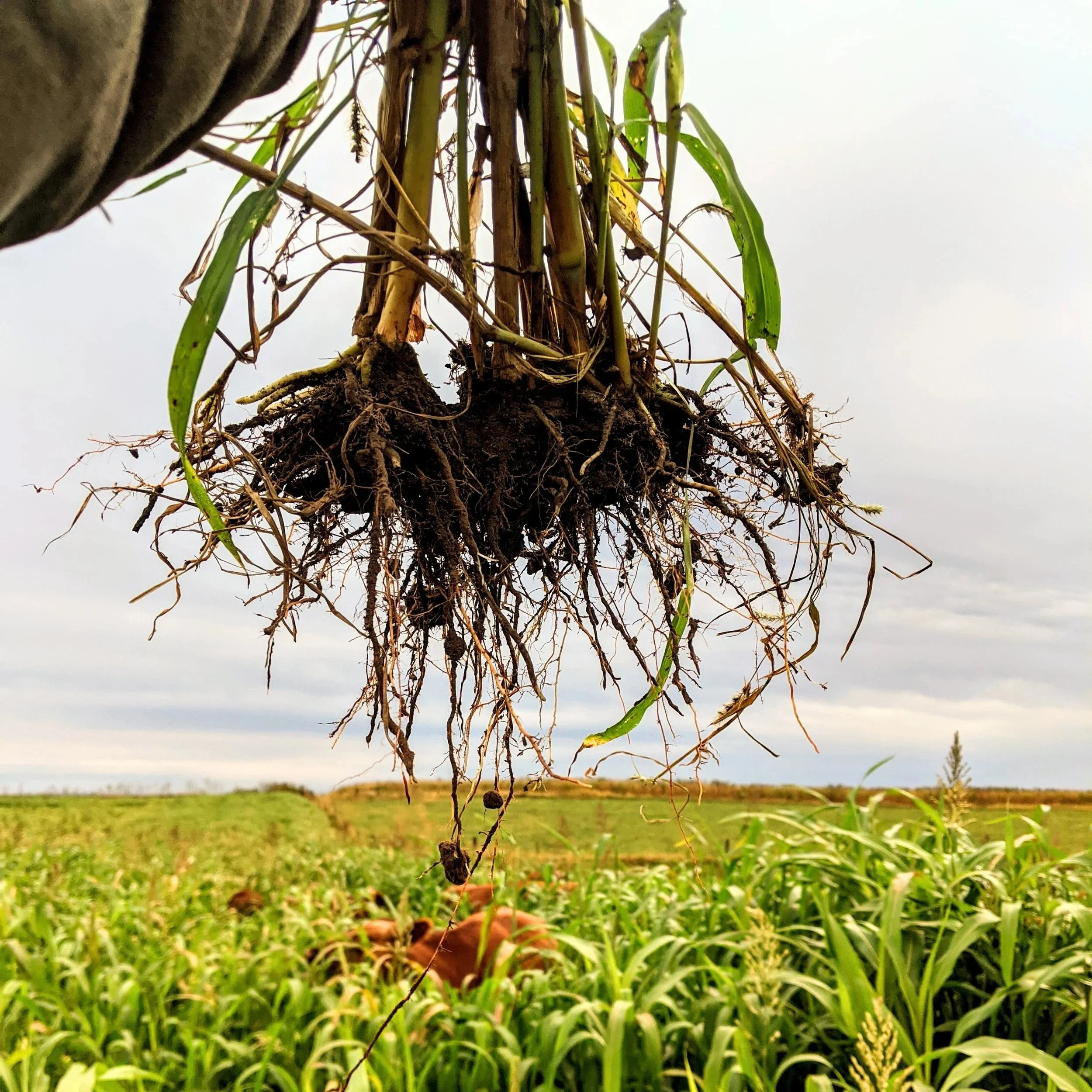
Our farmers: Plants and soil have a "barter" system. Plants take sunlight and CO2 to create sugars, which they pump out through their roots to feed soil microbes. In exchange, the microbes provide the plants with minerals. Cool season perennial pastures in this region can start growing and photosynthesizing as soon as the ground thaws in the spring and grow until the ground freezes solid again the next winter! On cropland we can use cover crops to grow living roots before and after the crops are planted and harvested
Your yard: If you have a vegetable patch, don't let it sit empty in winter. Plant a cover crop like cereal rye or crimson clover in the fall. They will keep the soil biology active until spring. Also consider incorporating perennial flowers, shrubs or vegetables. Unlike annuals, their roots stay in the ground year-round, providing a permanent home for beneficial microbes.
4. Maximize Biodiversity
Our farmers: In corn and soy production, other plants are seen as weeds pulling nutrients away from the grain. But in a grazing system, all plants bring different nutrients and support different types of microbes. They have different root systems as well, some of which can break up surface compaction and others secure nutrients and water from deep in the soil.
Your yard: Create a pollinator pocket by replacing a small patch of grass with a mix of native wildflowers. This attracts different insects, which in turn leads to a more diverse underground microbial community.
5. Integrate Livestock
Our farmers: Well we are the Grass Fed Cattle Company, afterall! All of our farmers integrate cattle in their operations and some bring in a diversity of livestock as well including chickens and hogs. Animals provide natural fertilization through manure and urine, and their grazing action stimulates plant growth and carbon sequestration.
Your yard: If your town ordinances allow it, a small chicken coop is the ultimate soil builder. Chickens "process" kitchen scraps into high-quality fertilizer and help manage pests like slugs. If you can't have animals, use worms. A worm bin (vericompost) or watering your plants with compost tea introduces the same beneficial bacteria and enzymes that animal integration provides. Using composted manure provides some of these benefits too.


Whether you have years of gardening experience, pots for growing a few tomatoes, a tiny lawn or large one, choose one suggestion and take one step towards better caring for your soil. We’re thankful you’re here and part of the soil health conversation!